
Revolution Idle
Oni GamingSimulation
4.81.52K Reviews
- Version
- 1.072
- Installs
- 500.00K
- Age Rating
- Everyone
Screenshots
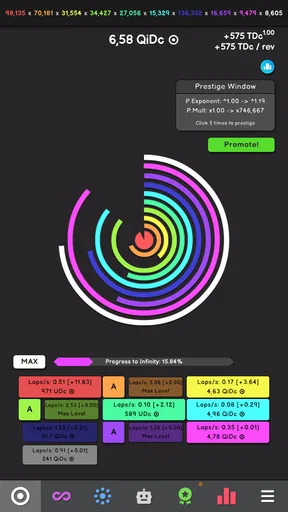
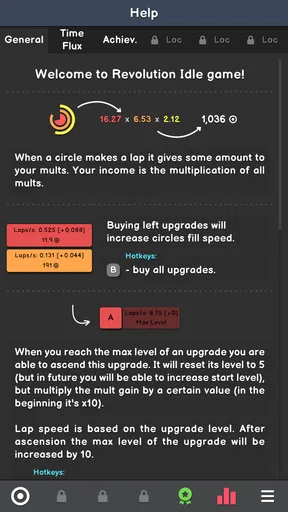
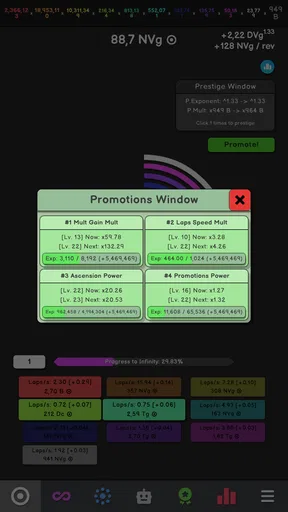
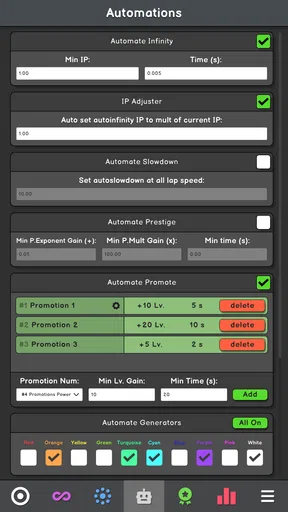
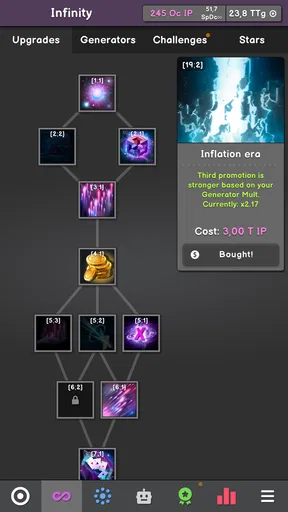
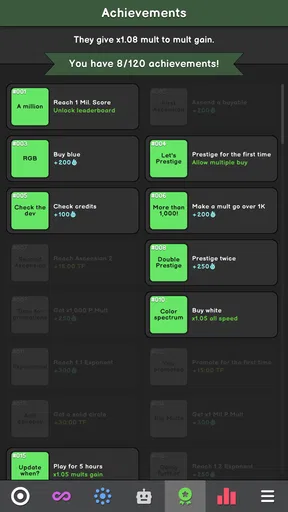
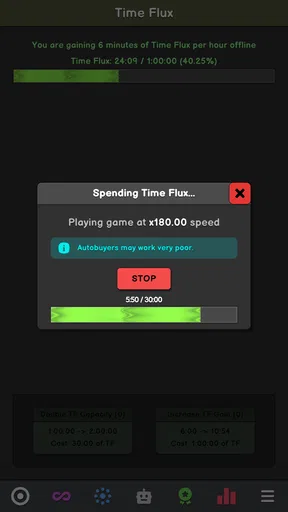
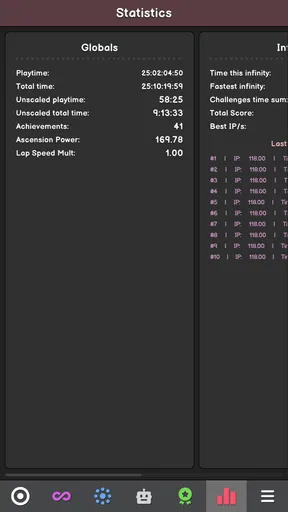
Our Review of Revolution Idle
 Analysis by Appyee
I spent time with Revolution Idle as a simulation game built around a very simple question: how far can I keep progress moving when I am not constantly tapping the screen? That sounds modest, but it creates a surprisingly particular kind of experience. The appeal is not fast action or a long story. It is watching a system grow, making a choice, leaving it alone, and returning later to see whether that choice was sensible.
That makes it easy to underestimate. The game looks quiet, yet its best moments come from understanding how to use short sessions well. I can check it during a break, make a small adjustment, and close it without feeling that I have abandoned a complicated mission. At the same time, anyone expecting a traditional simulation with detailed construction, characters, or hands-on control may find the minimal approach too thin.
Oni Gaming presents it as a free game for Everyone, and it works on Android devices running at least version 6.0. The current version is 1.072, while the game itself was released on October 11, 2024. It has passed 500 thousand installs and holds a 4.8 average from around 43 thousand ratings, which suggests that the focused idle format has found a receptive audience. I think that enthusiasm makes sense, although the rating should not be mistaken for proof that it suits every type of player.
How clearly the game communicates its progress
I find that the game’s clearest strength is how it lets me follow progress without turning every visit into a task. In this section, I’ll look at the difference between seeing a number rise and understanding what a choice actually changed. That distinction matters most when I’m deciding whether to check in briefly or spend longer comparing options.
A readable idea with a deliberately spare presentation
The first strength is that the central loop is easy to understand. Progress continues toward increasingly ambitious goals, and my job is to decide when an upgrade or change is worth taking. There is no need to learn a large control scheme before the game becomes useful. That is valuable for players who prefer interfaces that reveal their purpose quickly instead of filling the screen with buttons.
The restraint also helps when I am playing in short bursts. I do not need to remember a complicated sequence of gestures from one visit to the next. I can open the game, inspect the current state, and make a decision based on what is visible. For a player who finds dense strategy interfaces tiring, that lower initial mental load is a real advantage.
However, a clean layout is not automatically a perfectly clear one. Idle games often present several values that are meaningful only after I have watched them change. A number may represent current output, accumulated progress, or the effect of a choice, and the difference matters. I found that the game is easiest to follow when I slow down and treat each screen as a dashboard rather than tapping every available option immediately.
My practical advice is to spend the first few sessions observing before trying to optimize. Notice which values move while the game is open and which rewards appear after returning. That habit is more useful here than chasing every visible improvement. It also reduces the risk of making choices simply because a button looks active.
Why the interface suits some readers better than others
The lack of frantic action makes this more approachable than many simulation games. I am not required to track enemies, aim precisely, or react to a timer. Someone who prefers calm decision-making can focus on the relationship between waiting and upgrading. The game also avoids the social pressure found in competitive alternatives, where missing a session can feel like falling behind other people.
Still, the experience depends heavily on reading small pieces of information and comparing them over time. Players with reduced vision may find a number-heavy idle screen demanding, especially during longer sessions. I would recommend using the largest comfortable display, keeping the device at a sensible distance, and checking whether the phone's own text or display settings make the interface easier to inspect. Those are device-level adjustments rather than features I would attribute to the game itself.
There is another subtle issue: idle progress can be visually quiet. If a player needs strong animation or obvious changes to understand that something happened, the understated presentation may not provide enough feedback. Conversely, that same quietness is helpful for people who are sensitive to constant motion or who want a game that does not dominate their attention.
The important trade-off is clarity through simplicity versus clarity through feedback. Revolution Idle keeps the number of actions manageable, but it asks the player to interpret gradual change. That is comfortable for patient users and less comfortable for anyone who needs immediate, unmistakable confirmation.
Navigation without a rush
I like that the game does not force me to make every decision in one sitting. In a typical session, I can review what has accumulated, inspect the next useful improvement, and leave. That structure supports people who have limited uninterrupted time. A parent waiting during a school pickup, a commuter with only a few minutes, or someone taking a short rest from work can engage without committing to a full level.
It is also a good fit for players who use games as a low-pressure routine. I can make a morning check, decide whether to invest now or wait, and return later. The game does not need to become the main event. In my experience, it works best as a small companion activity rather than something I stare at continuously.
The downside is that the absence of urgency can make navigation feel less rewarding for players who want constant direction. Traditional simulation games often give me a visible project, a map, or a sequence of tasks. Here, the goal is more abstract. If I need a clear story of what to build next, the game may feel like a spreadsheet with a game layer rather than a world I am shaping.
Motor, sensory, and everyday access
I approach access here as a mix of physical effort, visual attention, and how easily the game fits around interruptions. The low-pressure pace can make it comfortable in situations where a reflex-heavy game would be awkward, but it does not remove the need to read and interpret the screen. I’ll focus on what that means in ordinary use, including when a device-level adjustment may help.
Low physical demand, with a few important qualifications
From a motor perspective, this is one of the easier simulation games to approach. It does not depend on rapid swipes, precise aiming, or repeated timing-based input. Progress is mostly about selecting an option and allowing time to work. That makes it more comfortable for players who find fast touch controls difficult or who prefer to avoid games that demand continuous finger movement.
That does not mean every interaction is effortless. Any touch-based interface can become awkward if controls are close together or if a player has limited precision. I would play with the phone supported on a table rather than held one-handed when making important choices. A stylus or a larger device may also help some users, although the usefulness of those tools will depend on the individual and the phone.
One non-obvious benefit is that the game can reduce the need for sustained grip. I can check it, put the device down, and let progress continue rather than holding the phone through an entire action sequence. For someone managing hand fatigue, that difference may matter more than the simplicity of the graphics.
There is a corresponding limitation: the game does not give me a physical reason to return other than curiosity and progress. Players who rely on strong tactile involvement, frequent gestures, or a sense of direct manipulation may not find the low-input design satisfying. A building simulator with drag-and-drop construction would probably offer a better fit for that preference.
Sound, motion, and attention
The idle format is naturally suitable for situations where I cannot give a game my full attention. I can open it briefly, make a decision, and stop. That makes it more practical than a real-time action game when I am in a noisy environment, sharing a room, or dealing with interruptions. It also avoids the problem of losing a match because someone needed my attention for a moment.
That flexibility should not be confused with complete hands-free access. I still need to look at the screen to understand progress and choose what to do next. Someone who cannot comfortably use visual information should not assume that an idle game automatically solves that problem. The core experience is quiet, but it remains screen-led.
For sensory comfort, the restrained pace is a positive. I am not dealing with an overloaded battlefield, a crowded map, or a constant stream of urgent effects. Players who are easily distracted may appreciate the narrow focus. On the other hand, the game can be too visually subtle for people who need strong changes to distinguish one state from another. If I miss a small update, the system may feel inactive even when progress is happening.
I also think it is worth separating boredom from accessibility. A slow game can be easier to tolerate physically while still being mentally uninteresting. Revolution Idle asks whether I enjoy monitoring gradual improvement. If I need frequent novelty, the calm presentation will not become more accessible simply because it is less demanding.
Using it around real life rather than against it
A realistic use case is a short evening routine. I can check the current progress after dinner, spend a minute deciding whether an upgrade has a meaningful effect, and close the app before starting another task. The game does not require the kind of uninterrupted attention that a campaign mission does, so it fits naturally into gaps that would otherwise be too short for a larger game.
Another useful approach is to treat it as a background check-in during a long day. Instead of opening it every few minutes, I would choose a small number of deliberate visits. This prevents the idle loop from turning into compulsive refreshing, and it makes each return more informative. The game is strongest when waiting has a purpose, not when I am repeatedly checking for tiny changes.
This also answers a common concern about free idle games: do I have to stay active to make progress? The design is built around the idea of progress continuing without constant input, so the game is more forgiving than an action title. But the meaningful part still comes from reviewing the situation and choosing what to do next. It is not a completely hands-off experience; it is a low-frequency management experience.
Players with irregular schedules may appreciate that rhythm. Someone who cannot promise a daily long session can still engage when time allows. Players who want a game that remembers exactly where they were in a detailed scenario may prefer a conventional simulation, because the abstract nature of this one gives less emotional weight to each return.
Where the free model changes the experience
The game is free to download and play, but it includes in-app purchases ranging from $0.99 to $99.99 per item. That range is important for anyone trying to keep mobile gaming predictable. I would approach the purchase layer as optional spending that needs a personal limit, not as part of the basic reason to install the game.
Idle design creates a particular temptation: waiting can feel like a problem that money might solve. My recommendation is to decide in advance whether I am enjoying the slow pace or merely trying to remove it. If the waiting is the feature, speeding through it can weaken the very loop that makes the game distinctive. If the waiting feels like friction from the beginning, purchasing is unlikely to turn the experience into a different genre.
Families should also remember that an Everyone age rating describes the general content audience, not a guarantee that every player will understand purchase prompts in the same way. Since the game is accessible to a broad age range, I would use the device's purchase protections when children share the phone or tablet.
Remaining barriers and who should choose something else
I think the key question is not whether the game is broadly easy to use, but whether its particular kind of quiet, number-led progress suits the person playing it. This section weighs that trade-off and points toward the kinds of players who may be better served by a more hands-on or visually expressive simulation. I’ll also consider how to approach the game without making its open-ended loop feel like another obligation.
The mental cost of abstract progress
The biggest barrier is not physical control; it is the need to find meaning in incremental numbers. I can understand the basic objective quickly, but deciding whether a choice is good may require patience. The game rewards players who are comfortable observing trends rather than demanding instant results.
That makes it less suitable for someone looking for a rich, hands-on simulation. If I want to design a city, manage individual workers, operate vehicles, or respond to changing events, I would choose a more conventional simulation game. Those alternatives provide visible cause and effect. Revolution Idle instead offers a compact loop where the satisfaction comes from scale and continuity.
It is also not the best choice for players who need a strong narrative reason to continue. There is no need for me to care about a cast of characters or a fictional place before progress feels worthwhile. That can be liberating, but it can also make the experience emotionally flat. I would skip it if my main reason for gaming is story, discovery, or role-playing.
How it compares with other idle games
Compared with clicker-style games, this feels more comfortable for someone who does not want repeated tapping to be the central activity. The value is in returning to a developing system rather than proving how quickly I can press the screen. Compared with full simulation games, it is much lighter on planning, visual detail, and direct control.
That middle ground is the reason I would recommend trying it. It is more thoughtful than a purely passive counter, but far less demanding than a management game with many independent systems. The trade-off is that players who enjoy optimizing a large network may outgrow it, while players who want a totally passive experience may still find the decisions too involved.
One useful way to decide is to ask what kind of progress feels satisfying. If I like seeing a long-running process become larger and more efficient, the game has a clear chance of working. If I need each session to contain a self-contained challenge, a puzzle, or a dramatic outcome, another category will probably serve me better.
My practical approach after playing
I would begin without spending money and give the basic loop enough time to show its character. I would avoid making an upgrade simply because it is available, compare the visible benefit with the time I expect to wait, and then close the game. That simple routine reveals whether I enjoy the decision-making or only the novelty of watching numbers rise.
I would also avoid treating every return as a demand for optimization. The game is more pleasant when I accept that some progress will be gradual. For players with attention difficulties, this can be helpful: one small goal per visit is easier to manage than trying to understand the entire system at once. For players who become anxious about unfinished tasks, however, the open-ended loop may create the opposite effect. There is always another improvement to consider, so setting a stopping point is essential.
On a shared device, I would be careful with accidental taps and purchase controls. On a smaller screen, I would use a stable surface and take time before confirming a choice. Those are modest habits, but they address the most realistic sources of frustration without pretending that the game offers specialized accessibility tools.
An inclusive verdict for the right kind of player
My final impression is positive, with a clear condition: Revolution Idle is accessible in pace and physical demand, but not universally accessible in interpretation. It removes many barriers associated with fast games, repeated gestures, and uninterrupted sessions. That makes it a thoughtful option for people who want a calm simulation experience that can fit around real life.
Its remaining challenges are equally clear. The interface depends on reading gradual changes, the objective is abstract, and the free-to-play structure includes optional purchases with a wide price range. Players who need strong visual feedback, rich storytelling, or direct construction should look elsewhere. Those who dislike waiting may also be happier with an active clicker or a more event-driven management game.
For me, the strongest use case is a player who enjoys quiet progress, has only short windows for gaming, and prefers decisions over reflexes. The Everyone rating and broad device support make it easy to consider, while the high average from around 43 thousand ratings and more than 500 thousand installs show that the format has connected with many people. I would recommend starting free, playing in measured visits, and judging the experience by whether the waiting feels satisfying rather than inconvenient.
Revolution Idle works best as a calm, low-pressure companion rather than a complete simulation world. When that is what I want, its simplicity becomes a strength. When I need richer controls, stronger feedback, or a more concrete world to manage, choosing another game is the more inclusive decision for my own needs.
Verdict
Strengths of Revolution Idle
- Simple idle mechanics make it easy to play in short sessions.
- Offline progress lets you earn rewards while away from the game.
- Many upgrade paths provide long-term goals and strategic choices.
- Clean visuals and relaxing effects create a low-pressure experience.
- Frequent resets can unlock powerful bonuses and speed up progression.
Limitations of Revolution Idle
- Progress can become repetitive once the early upgrades are completed.
- Some upgrades require extended waiting or repeated manual actions.
- The interface may feel confusing until the different currencies are understood.
- Ads or optional purchases may be needed to accelerate slower progression.
- Limited active gameplay may not appeal to players seeking constant interaction.
Similar Picks in This Category
View All
Truckers of Europe 3
Wanda Software4.3

Town Building Life Simulator
XGame Global4.2

Fidget Toys Trading・Pop It 3D
Freeplay Inc4.7

Sculpt People
CrazyLabs LTD4.4

Scary Teacher 3D
Z & K Games4.2

Hair Tattoo: Barber Shop Game
CASUAL AZUR GAMES4.3
Frequently Asked Questions
What is Revolution Idle, and how does the gameplay work?
Revolution Idle is an incremental idle game focused on growing circular progress bars and optimizing automated income. You begin with simple rotating rings, then unlock upgrades, currencies, prestige systems, and additional mechanics that increase production over time. Progress continues while you are away, so the main appeal is checking your setup, purchasing improvements, and making strategic resets rather than controlling characters in real-time.
Can I play Revolution Idle without an internet connection?
Revolution Idle is generally designed to support offline progress, allowing your systems to continue generating resources while the app is closed. However, some features may depend on an internet connection, including advertisements, cloud-related services, purchases, updates, or promotional content. If offline progress is important to you, it is worth opening the game periodically to ensure your earnings are calculated and saved correctly.
Is Revolution Idle free to download and play?
Yes, Revolution Idle can be downloaded and played for free, although it may include optional advertisements and in-app purchases. You can normally progress without spending money, but paid options may provide convenience, remove advertising, or offer extra resources. The game is built around gradual progression, so patience is often enough; purchases are better viewed as optional shortcuts rather than requirements.
Does Revolution Idle contain ads or require purchases to progress?
The game may display advertisements, commonly offering optional rewards such as boosted production or additional resources. In-app purchases can also be available for convenience and premium benefits. During testing, the progression structure felt centered on repeated upgrades and resets rather than forcing payment, but players who dislike ads should review the available ad-removal options and purchase details before committing.
Is Revolution Idle suitable for beginners, and does it require constant attention?
Revolution Idle is approachable for beginners because its basic loop is easy to understand: earn resources, buy upgrades, unlock systems, and reset strategically for stronger long-term growth. It does not require constant attention, making it suitable for short check-ins throughout the day. Still, the number of currencies and progression layers can become more complex, so players who prefer simple games may need time to learn the optimal upgrade order.
Play our best games!


